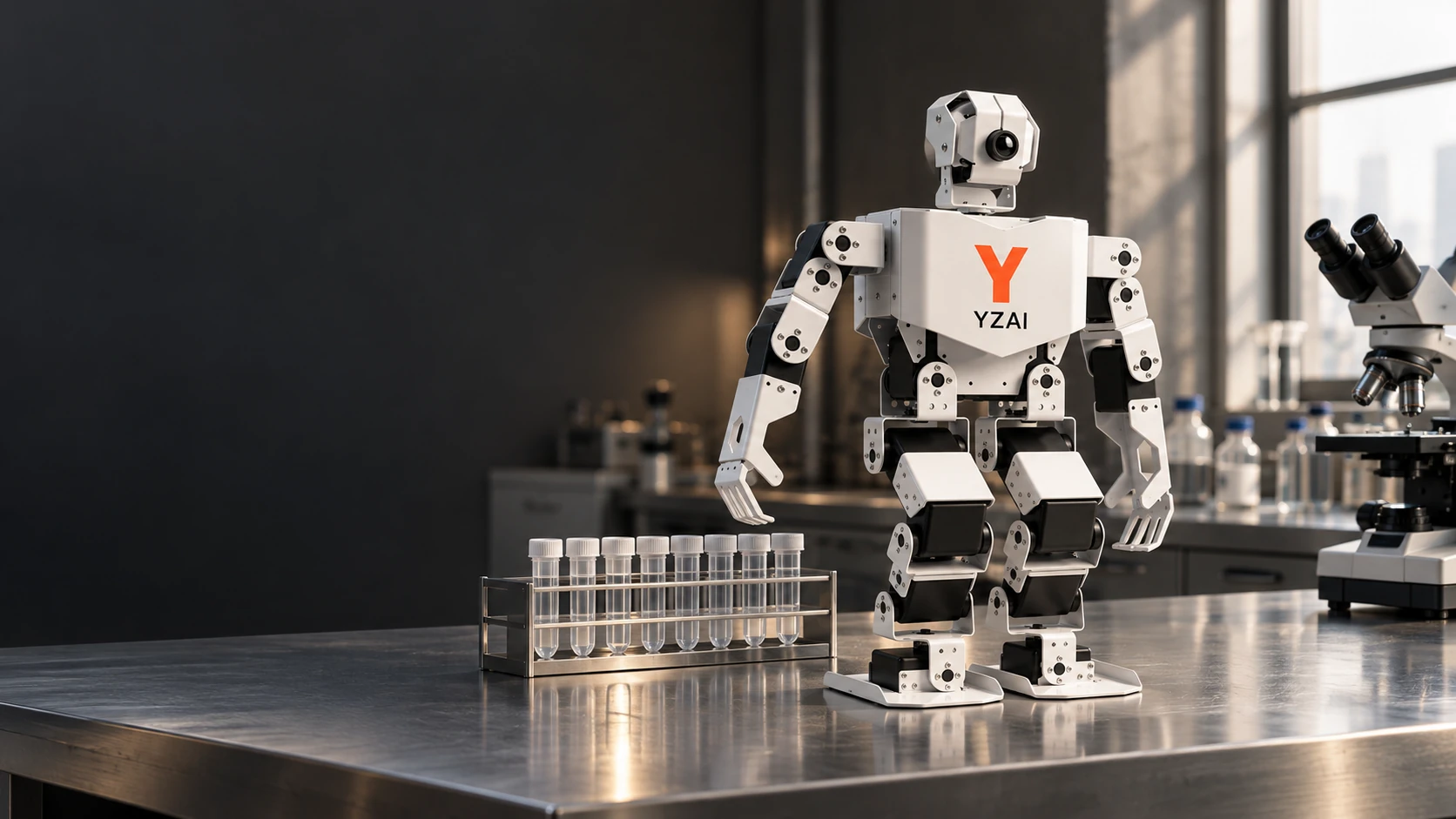
 01
BIOLOGY & CHEMISTRY
More time for discovery.
Cell imaging, visual analysis and robotic workflow integration for repetitive laboratory tasks. Designed around traceable data and reproducible steps.
 YZAI云周智能
From a single image to a precise action. We bring optics, AI and robotics together to make useful machines.
Explore what we’re buildingA SMALL ROBOT. A PRACTICAL AMBITION.
A laboratory needs repeatable results. A kitchen needs careful timing. A field needs the right information. We start with the task, then design the sensing, software and motion around it.
Explore the applications guiding our development—from the scale of a cell to the scale of a landscape.
01Cell imaging, visual analysis and robotic workflow integration for repetitive laboratory tasks. Designed around traceable data and reproducible steps.
 02
Vision-guided manipulation and coordinated cooking sequences. Bringing careful observation, timing and repeatable movement to food preparation.
 03
Drone imaging, crop observation and computer vision for agricultural workflows. Turn images from above into information people can use on the ground.
 04
Optical inspection, intelligent hardware and robotic handling concepts for electronics. Connecting chip design, embedded software and machine vision.
Application imagery is AI-generated concept visualization. Project scope, feasibility and performance are assessed individually.
Useful automation comes from making the whole system work together. Our focus connects three disciplines.
Optical systems, image acquisition and computer vision. From cell morphology to visual inspection, begin with a reliable view of the world.
Algorithms, agents and task planning that turn observations into decisions. Software built around the workflow and the people using it.
Motion, embedded control and system integration. Bring sensing and software into machines that interact with the physical world.
Our robot concept brings a familiar face to the work ahead. A closer look at YZAI’s vision for everyday automation.
Bring us the task you want to improve. We’ll work through the requirements, build the right prototype and test it against a clear purpose.
Tell us what you have in mindMap the workflow, operating conditions and the outcome you need. Define success before choosing the technology.
Develop a focused prototype. Test the optics, algorithms and motion with representative tasks and data.
Measure what works, address the limits and plan integration around your team’s day-to-day use.
Research collaborations, development projects
and a good problem to solve. We’d like to hear from you.